PRONUNCIATION IS VERY IMPORTANT!
object width="425" height="344">
Enjoy this video and tell me about it in class.

Enjoy this video and tell me about it in class.
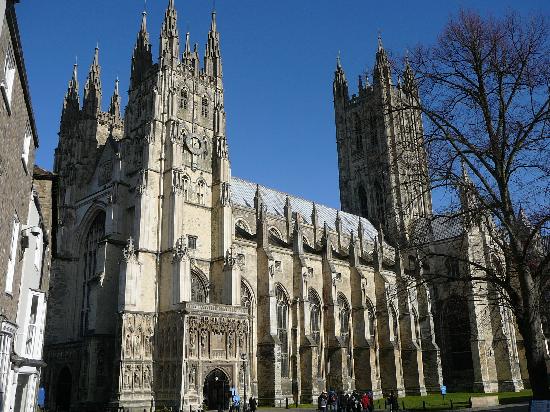
Here is your fourth text this term. It must be finished by 23rd November.
CANTERBURY
Canterbury is a town in Kent with a population of about 120.000. It is the religious capital of England because its cathedral is the seat of the Archbishop of Canterbury who is head of the Church of England.
From the 12th to the 15th centuries, it was a place of pilgrimage. Thousands of people came to pray to the shrine of a former Archbishop of Canterbury who was murdered in the Cathedral in 1770. His name was Thomas Becket.
Murder in the Cathedral
During the 12th century, King Henry II decided that Church had too much power. In 1162, he made Thomas Becket Archbishop of Canterbury, thinking that his friend would help him to weaken the position of the Church. Although the King himself liked Thomas, he was not popular with other powerful men in England.
They were jealuos of his frienship with the King, and they also disliked him because he was not a nobleman.
As Thomas was not even a priest, many people were angry that he had been made Archbishop.
The king was amazed when Thomas began to defend the position of the Church against the King. After a while , Thomas had to leave England because relations between him and the King had become very bad, and Thomas was afraid that he might be killed. He lived in exile for five years until the King asked him to come back. The people , the bishop and the Pope were causing the King problems because they all wanted Thomas to continue as Archbishop of Canterbury.
When Thomas returned in 1770, he brought authorization from the Pope to excommunicate the priest and nobleman who had acted against him. The King was furious when he learned this −soon afterwards, four of Henry’s knights entered Canterbury Cathedral and murdered the Archbishop on the steps of the altar.
Three years later in 1773, Becket was made saint, and his tomb became the destination of throusands of pilgrims for three centuries. It was said that miracles happened there, and many sick people went there in the hope of finding a cure.
In the 16th century, when King Henry VIII separated from the Roman Catholic Church and established the Church of England, he said that Becket was no longer a saint, and his tomb was destroyed.
Amazed = surprised Afraid = frightened Pilgrims = Journey makers to a holy place
1) In your own words and based on the ideas from the text, answer the following questions.
a- Why was T. Becket’s tomb destroyed?
b- Who remained loyal to T. Becket when he came back to England?
c- Why didn’t his enemies accept T.Becket?
d- Why did King Henry II make T. Becket Archbishop of Canterbury?
2) Are the followings stament true or false? Quote the text.
a- King Henry II was very pleased when T. Becket returned to England.
b- T. Becket was a famous priest before being made Archbishop.
3) Find words in the text that have a similar meaning.
· Grave
· Unlawful killed
· A place of worship and prayer.
· To diminish power.
4) Write a composition. Choose one of these topics:(About 100 words)
a- Write about a city or town in Great Britain that you have visited and that you know well. (You
can find extra information on the web or tourist brochures).
b- Write about Santiago de Compostela and its world famous cathedral.
Hi there! Let me show you this beautiful advertisement I’ve recently watched on BBC world service. It’s awesome! This video is part of Prince Charles’ campaign to save the rainforest. The frog is computer-generated. Please, enjoy it and post your comments.
TEXT 3 FOR 1º BACH A
Please, give this text to your teacher on 9 November 2009.
KWANZAA AND HANUKKAH
Kwanzaa is a spiritual celebration of the oneness and goodness of life. On 26 December 1966, Dr Maulana Ron Karenga formulated and developed Kwanzaa. African Americans weren’t used to celebrating their past. He believed that the only way to achieve a revolutionary change for Black Americans was to promote awareness of African American heritage. Dr Karenga wished to go back to the “way of life” that the ancestors of Black Americans used to have. This “way of life” allowed them to endure slavery, racism and oppression after their arrival in Amaerica. Dr Karenga’s goal was to develop self-awareness and facilitate self-esteem among Black Americans by exposing them to Kwanzaa, a set of principles based on a common heritage.
Kwanzaa begins on 26 December and lasts until 1 January. A great feast called the Kamaru is held on the night of 31 December and houses are decorated in the traditional colours of black unity: red, black and green. The food includes the fruit and vegetables of the year’s harvest, like corn, and the gifts given are often home-made. Today, millions of people celebrate Kwanzaa throughout the world. Many people mistake it for an African American form of Christmas because it occurs the day after Christmas, but actually it has no ties with any region.
If Kwanzaa is a struggle for self-awareness, the story of Hanukkah is the struggle for religious freedom. More than a thousand years ago, the foreign rulers of the Israelites forced the Jews to forget Judaism and to bow to the image of their leader. But the Jews refused; in fact, Jewish law prohibited them from bowing to statues or idols. A small group of Jews – called the Maccabees – risked their lives to live freely. They won, but the Temple of Jerusalem had been destroyed. They cleaned and repaired the Temple, and when they finished they re-lit the menorah, a symbol of the eternal agreement (covenant) between God and the Jewish people. Although there was only enough oil to light the menorah for one night, the oil burned for eight days and nights until they were able to make more oil.
Today, the commemoration of those nights is called Hannukah. It begins on the 25th day of Kislev (normally December, in the Gregorian calendar) and lasts for eight days. Relatives gather together, give gifts to children and, most important, light a candle of the nenorah each day. Hannukah is not a major Jewish celebration but, because of its proximity to Christmas, it is very important in countries such as the United States, where Christmas has a great deal of commercial and cultural importance.
1) Find the opposites of these words in the text.
a- death (paragraph 1) c- allowed (paragraph 3)
b- freedom (paragraph 1) d- a little bit of (paragraph 4)
2) Match the words from the text with their definitions,according to their meanings in the text.
1- to achieve (paragraph 1)
2- awareness (paragraph 1)
3- heritage (paragraph 1)
4- to endure (paragraph 1)
5- harvest (paragraph 2)
6- tie (paragraph 2)
7- struggle (paragraph 3)
8- to bow (paragraph 3)
9- to risk ( paragraph 3)
10- to gather (together) (paragraph 4)
a- to collect, assemble a group together
b- consciousness
c- to get, obtain
d – to lower one’s head as a sign of respect
e- to survive a difficult situation
f- traditions, languages or buildings that belong to the culture of a
particular culture
g- link
h- fight, great effort
i- the time of year when crops are cut and collected from the fields
j- to put something in a dangerous situation where you might lose it
3) Are these sentences True or False? Quote the text.
a- Dr Karenga wanted to recover African and African-American ways of life.
b- A lot of people celebrate Kwanzaa.
c- The Maccabees had enough oil to make the menorah burn for several days.
d- During Hannukah, people light only one candle.
4) Answer the following questions.
a- When did Kwanzaa start?
b- Why do many people mistake Kwanzaa for an African American form of Christmas?
c- What do Jewish people do on each day during Hannukah?
d- Why did the Jews refuse to bow to statues or idols?
e- How long does Hannukah last?
5) Write a description of your favourite celebration in Galicia. (about 100 words)
You can use paragraph 4 of this text as a model.
SURF THE DUNES!
Surfing is a sport that has really taken off in England in the past few years. Although it looks difficult, standing on the board is a piece of cake for most people. It you can’t do it at first, don’t give up. It’s not the end of the world, keep on trying and you’ll soon pick it up. Normally, the first time someone manages to ride a wave all the way to shore, they are on cloud 9. Some people adore surfing so much that they get completely hooked on it. If it happens to you, you will constantly be saving up to get to exotic places. If you go surfing to Australia, look out for sharks!
But if water is not your cup of tea, why not hit the dunes, or sand hills, and surf the sand? Speedsters from New Zealand to New Mexico are catching the wave of a hot new sport called sandboarding. You can sandboard on your feet or lying down and use anything from a piece of cardboard to an old snowboard. But a sandboarder needs to overcome sand’s friction (rubbing force). So boarders take advantage of freshly blown sand, with air trapped between the sand particles.That makes for boardind speeds of more than 88km (55 miles) per hour. “Sandboarding is free and fun. When you sandboard, you practically glide on air,” says Tim Beale, of Sandboard magazine.
1) A-Find expressions in the text similar in meaning to these ones.
a- To be very easy. b- To abandon. c- to learn.
d- To like, to be fond of e- To be very happy f- to be addicted
B- When you have found these expressions in the text, make up a sentence
of your own with each one.
2) Answer the following questions in your own words.
a- What can happen to people who like surfing?
b- What is the main difference between both kinds of surfing described in the text?
c- How can sandboarders reach a high speed?
3) Are these sentences True (T) or False (F)? Quote the text with your
answers.
a- Surfing has become less popular in England.
b- Standing on the surfboard is hard for most people.
c- You need expensive equipment to go sandboarding.
d- Friction is an important problem in sandboarding.
4) Write questions for the underlined words.
a- Surfing has taken off in England.
b- You can sandboard on your feet or lying down.
c- Beale said that sandboarding is free and fun.
5) Write a composition (100-150 words)
A personal description: Describe your favourite sportsman / sportswoman.
Hi again! Let me recommend you the following grammar book with great explanations in Spanish and exercises. It's useful for 1º Bach, 2ºBach and those students who want to study at the "Escuela de Idiomas".
THE HEINEMANN ENGLISH GRAMMAR (edición española)
by Digby Beaumont and Colin Granger
Here is your first text to practise reading with vocabulary and comprehension activities. I have chosen "The Latest on the Brain " text because of its scientific and "amazing" content. I’m pretty sure most of you will find it interesting and "enlightening". Remember to copy and paste it in Word if you want to print it.
THE LATEST ON THE BRAIN
The bad news: teenagers’ brains are underdeveloped. The good news: you can turn your mind into a machine which is quick and bright!
The teenage brain, according to the latest research, is different from the adult brain. It’s less developed and more changeable than scientists had previously thought. This has led some researchers to an amazing conclusion: teenagers can influence how their own brains develop . As a result, the way you spend your time determines how much brainpower you will eventually have when you grow up. You can actually increase your brain power!
Mental Growth Spurts
Until recently, scientists believed that the human brain reaches maturity at puberty. However, now they think the teenage brain is a work in progress and for this reason , the teenage years are a critical time in brain development.
The parts of the brain which are not used die off. They are cut off - or "pruned", as scientists describe cell death- , and the brain rewires itself. Until their brains are totally pruned, teenagers don’t have full use of some of its most vital and sophisticated parts, including the areas involved in judgement, reasoning and planning for the future.These areas are not completely "online" until the late teens. This does not mean that teenagers are stupid , but until the judgement and reasoning centres are fully mature, teenage behaviour may be more driven by instinct and immediate gratification.
Building a better Brain
There is also good news. The "unpruned" nature of the teenage brain - which may make teenagers impulsive- is the very thing that gives teenagers the ability to control their brain’s development.
According to the scientists, which cells are pruned and which remain is determined largely by the person’s activities. Teenagers’ activities hardwire their their brains for the rest of their lives. If you exercise a muscle, you make it stronger; consequently,the more you deal with difficult problems the better your brain will be. Learning a foreign language, music or how to play games makes the brain work hard. On the other hand, alcohol and drugs damage brain cellls.
The mind you’ll eventually end up with- keen and active or dull and slow - has a lot to do with how you’re using your brain now. So give up watching TV endlessly and exercise your brain, or it will turn into mush!
A- Are these sentences True or False? Explain your answers quoting the text.
1- Teenagers can influence the development of their brains.
2- Scientists have stopped thinking that the human brain reaches maturity at puberty.
3- Teenagers seldom behave instinctively.
4- The more you exercise your brain, the stronger it becomes.
B- Answer these questions using your own words.
1- According to the text, what determines brain power?
2- Why are the teenage years a critical time?
3- Which areas of the brain are not fully mature until the late teens?
4- How can you help your brain develop?
C-Find these phrasal verbs in the text and match them to their meanings.
1- Grow up a) await with pleasure
2- cut off b) tolerate, bear
3- put up with c) become an adult
4- give up d) mean (initials, etc.)
5- look forward to e) disconnect, remove
6- stand for f) stop, abandon (a habit)
D- Now write six sentences of your own using the phrasal verbs of exercise C.
E- Write a short text (about 100 words) answering this question:
What are the pros and cons of being a teenager?
This is the famous speech by Nelson Mandela that you liked so much. I hope you think about these famous words and take out the "heroes" inside yourselves.
OUR DEEPEST FEAR
"Our deepest fear is that we are powerful beyond measure.
It is our light, not our darkness that most frightens us.
We ask ourselves, Who am I to be brilliant, gorgeous, talented, fabulous?
Actually, who are you not to be?
You are a child of the universe.
Your playing small does not serve the world.
There is nothing enlightened about shrinking so that other people won't feel insecure around you.
We are all meant to shine as children do.
We were born to make manifest the glory of the universe that is within us.
It's not just in some of us; it's in everyone.
And as we let our own light shine, we unconsciously give other people permission to do the same.
As we are liberated from our own fear , our presence automatically liberates others."
"More Than Words" by Extreme is a song that I love. It is considered one of the most beautiful love songs ever written. This video is a karaoke version with the lyrics and the translation into Spanish. Now you can sing along and understand what you are saying. I hope you have fun with it!
"You've got a friend" was written by Carole King, but James Taylor also sang it beautifully. You'll see Carole King at the piano on this video. I hope you enjoy this song as much as I do whenever I listen to it.
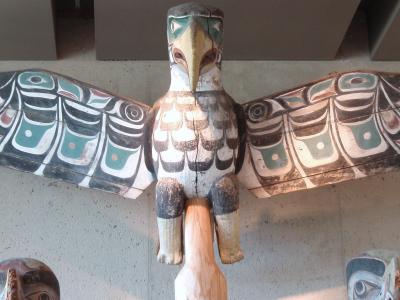
Anthropology Museum in BCU in Vancouver.
Hey, everybody! This is a new beginning for the school year 2009-2010. Ill be writing and downloading new stuff from time to time. This blog is our link. I hope you enjoy and practise your English with all the activities I have chosen with love  . Let me tell you that I am as nervous as you, but my motto is:
WHEN YOU MOVE BEYOND THE FEAR, YOU FEEL FREE!
BEAT ALL YOUR FEARS AND LET YOUR SPIRIT SOAR!

New York es una de mis ciudades favoritas. Aquí os enseño algunas fotos de "La Gran Manzana"


GALICIA